Whose History?
Facts. Fragments. Narratives.
History for Peace Regional Conference
2 and 3 November 2026
Vidyagyan School, Bulandshahr
People crave narration … That’s the way they learn things. That’s the way human beings organize their human knowledge—fairy tales, myths. All narration—Toni Morrison
At this conference, the central question we wish to explore is What is the relationship between narrative and historical representation and how does this shape the way we understand our past and negotiate the present?
History curricula in schools is generally structured around a nationalist frame, rendering memories, localized spaces, gendered domesticities, subaltern subjectivities, plurality of experiences and the presence of multiple contexts invisible.
Narratives have the power to reverse these erasures. Narratives humanize the past, they restore individual and collective agency, they create empathy— re-centring history on human choices, emotions and moral dilemmas.
However, they are also prone to bias, manipulation and distortion. They can perpetuate the very erasures they are capable of reversing.
While engaging with narratives, historians cross examine them with evidence and understand how they are constructed, embodied and contested across time, space and geographies.
Over two days we will look at various aspects of narratives in history to explore, together, how history education can be transformed from passive engagement to an active practice of civic imagination and critical questioning.
JUST PUBLISHED
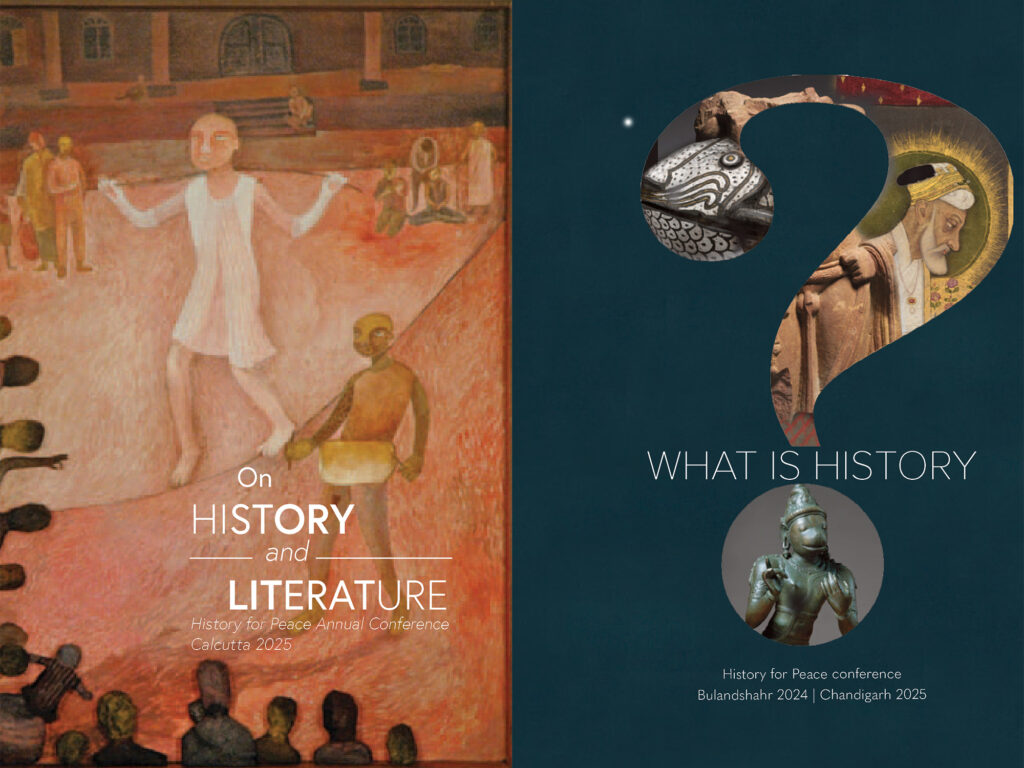
What is History?
Is it a collection of dates and facts? Is it the study of human experiences, actions, and their consequences across time? Is it a vital tool for understanding the present and shaping the future? By studying history, do we gain a deeper appreciation of our collective heritage, identity, and the complexities of human existence?
Historians weave narratives from scattered fragments, crumbling ruins, dusty archives and bulky manuscripts. Does their craft make them storytellers?